






Home buying tips

How Rate and Term Refinancing Works: Real Estate Investor Friendly

6 min read

Rate and term refinance loans are a great way for homeowners and real estate investors to lower unfavorable interest rates, take advantage of changing market conditions, tweak mortgage terms, and more. With rate and term refinancing, you’re replacing your existing loan, so none of your home’s equity is at risk. They’re a great choice if you simply want to adjust your existing loan without any need for additional cash from your home’s equity.


Mortgage Marketplace is here to help you understand your home refinance options. From rate and term and cash-out refinancing to home equity loans and HELOCs, we have your needs covered. Contact a Mortgage Marketplace professional at (833) 970-1560 today to learn more about your refinance options.

Quick Summary

Rate and term refinance loans replace an existing home loan with a new one with better rates, terms, and payments.

They’re good for homeowners who want to adjust their mortgages without touching home equity.

Key requirement: Most lenders require applicants to have at least a 620 credit score for conventional refinance loans.

Tips: Rate and term refinance loans are often used to change from unpredictable and unfavorable loan types like ARMs and FHA loans.

Discover what you qualify for

let us guide you every step of the way!

What is a Rate and Term Refinance?

A photo of lovely pink flowers in front of an out of focus house.

Also called rate and term options and no cash-out refinancing, rate and term refinance loans replace your current loan with a second mortgage in more favorable terms. Rate and term refinances often offer homeowners more favorable interest rates, mortgage terms, or monthly payments


When you refinance your loan, you’re paying off your previous mortgage with a new one, then making payments on that new mortgage. Property owners use rate and term refinances to change rates, terms, and payments without touching their home equity, simplifying the process and reducing the risk of foreclosure.


Rate and term refinancing is a good way to leverage shifting market conditions into better cashflow or lower expenses, and they are a great choice for homeowners and real estate investors alike. Here’s more about how they work:

Why Property Owners Use Rate and Term Refinancing

Someone handing off a stack of bills and a clipboard to the person they are sitting across from.

Rate and term refinancing allows homeowners and real estate investors to change their existing loan to a more favorable one, all without affecting home equity. They’re a safe way to free up funds tied into a property, and homeowners use them to adjust several loan terms, including:

Interest Rates

Refinancing can help you get lower rates if the market’s interest rates have dropped since you first got your mortgage loan. If your credit score has risen or you’ve been able to build significant equity in the property, you may qualify for better rates, too.


Interest rates are constantly shifting, and even a small percentage shift can help you save thousands. Savvy homeowners and property investors are always watching the market, ready to take advantage of better rates, but they don’t have to do it alone: Mortgage Marketplace is here to help you secure better property financing. Call us today to learn more about how a refinance can help you exceed your financial goals.

Term Length

Many homeowners use refinancing to shorten loan terms, like reducing a 30-year mortgage to a 15-year mortgage. Shortening loan terms increases monthly payments, but can save thousands in interest payments.


Homeowners and real estate investors seeking to fully own their home sooner can take advantage of a rate and term refinance. You can free up a lot of extra money and move on to other home projects or investments if you pay off the property sooner.

Loan Type

Many homeowners use rate and term refinancing to change their loan type. A popular choice is refinancing adjustable-rate mortgages (ARMs) to conventional fixed-rate mortgages that offer more stable payments and favorable interest rates

Monthly Mortgage Payments

You may need to reduce your monthly payment if your financial situation has changed since you started your loan. Lengthening a term or reducing interest rates can help you lower your monthly payments.


However, the short-term savings come at a long-term cost: lowering mortgage payments could lead to you paying significantly more in the long term. Your loan principal will have more time to build interest, raising your overall payment burden.


Refinancing should be used with care, but don’t worry: Mortgage Marketplace has you covered. Our mortgage refinance calculator can help you determine if refinancing will help you meet your homeownership and investment goals.

Take your first step

It only takes 2 minutes to find out what you qualify for.

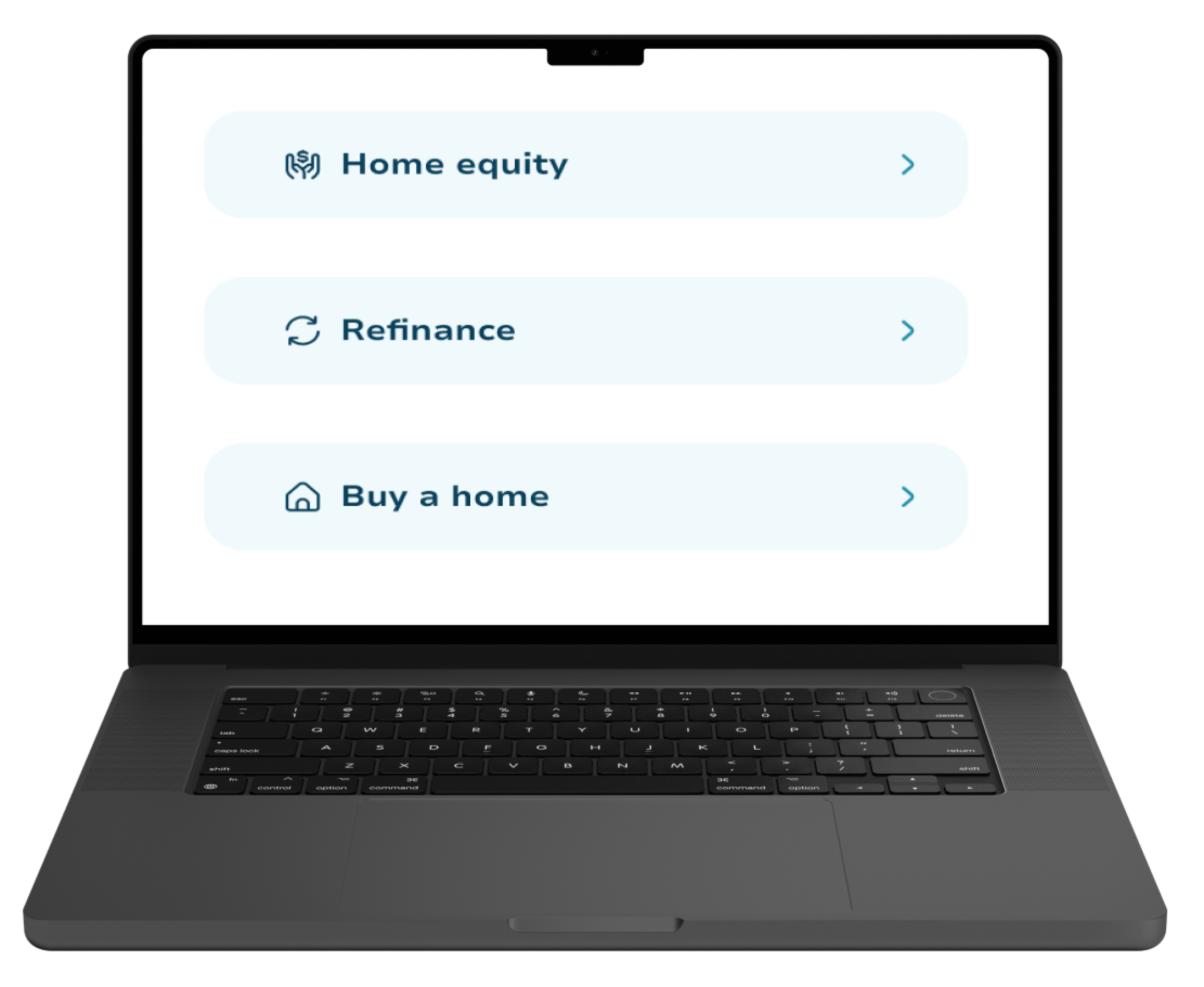
A graphic of a laptop with the Mortgage Marketplace survey on it. It has the buttons for "Home equity", "Refinance", and "Buy a home"

Rate and Term Refinancing Requirements

Portrait Of Senior Couple Standing In Driveway In Front Of Dream Home Together

Because you’re applying for a new loan when refinancing, the requirements will be similar to those of your initial home loan. Mortgage loan requirements vary by lender and loan type, but common requirements include:

Credit Score Requirements

Most lenders require a credit score of at least 620 to qualify for a conventional home loan, but requirements for refinancing may vary, depending on your owned home equity. If your existing loan is a VA or FHA loan, each offers streamlined refinancing, allowing you to quickly refinance with lower credit score requirements and without an appraisal.

Home Equity Requirements

Home equity is the portion of the initial loan you’ve paid off. The more equity you have, the larger the percentage of your home you own, and the lower your interest rate.


If you own 20% of your home’s equity, you’ll be able to avoid having to pay for costly private mortgage insurance (PMI). FHA loans avoid mortgage insurance when homeowners own 10% of their home’s equity. 


Generally, the higher the equity, the better the rates you’ll get. Check our refinance calculator to see the effect your owned equity can have on your rates and overall loan payment.

Debt-to-Income (DTI) Ratio Requirements

Lenders usually require a debt-to-income ratio below 43% when applying for conventional mortgages and refinance loans. This ratio is calculated by dividing your monthly debt payments by your monthly before-tax income, and for lenders, the lower the better.

Loan-to-Value Ratio (LTV) Requirements

Maximum loan-to-value ratios vary by loan type and lender. For rate and term refinances using a conventional loan, most lenders will loan up to 97% of a primary residence’s value as determined by an appraisal. For second homes and investment properties, maximums drop to 90% and 85%, respectively.


This means you’ll have to own some equity in your home before refinancing. Ensure you meet home equity requirements before applying.


However, the short-term savings come at a long-term cost: lowering mortgage payments could lead to you paying significantly more in the long term. Your loan principal will have more time to build interest, raising your overall payment burden.


Refinancing should be used with care, but don’t worry: Mortgage Marketplace has you covered. Our mortgage refinance calculator can help you determine if refinancing will help you meet your homeownership and investment goals.

Closing Costs

Because you’re opening a new mortgage, rate and term refinance loans require closing costs. Refi closing costs typically range from about 3% to 6% of the loan’s balance, and that’ll be due up front.


Some lenders offer refinancing with no closing costs, but in exchange for short-term savings, you may pay more in the long term. With these refi loans, your lender will cover your closing costs, but in exchange, you’ll have to accept a higher interest rate.


Mortgage Marketplace is here to help you understand the complex requirements of refinance loans. Contact us for assistance determining if a loan refinance is right for you.

How to Get a Rate and Term Refinance

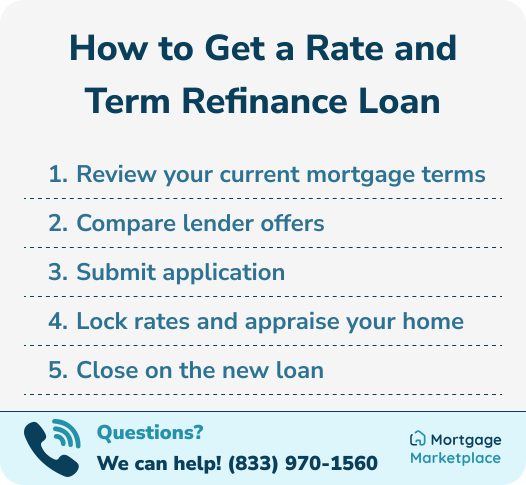
When you apply for a rate and term refinance, you’re simply applying for a new loan, and it should be a similar process to your first loan’s application. You’ll likely need similar documents, so prepare them when you’re searching for lenders. And if you need help in that search, Mortgage Marketplace is here. Call us for assistance finding the refinance opportunity that works for your needs and budget.

The rate and term application process includes:

  • Shopping for a lender
    Finding the right lender can be tough, with varying rates, options, and more. If you need a little boost, Mortgage Marketplace can help.
  • Preparing documents
    You’ll need similar documents to what your initial home loan application required, including at least two weeks of pay stubs, two most recent banking account statements, and at least one recent W-2 income tax form. Some lenders may require additional documentation, and requirements vary.
  • Applying
    Once you’ve found your lender and prepared your documentation, it’s time to apply.
  • Lock in your rates
    Most lenders offer an opportunity to lock your rates once your application is accepted, protecting you from rate changes before you close.
  • Appraisal
    Lenders require a home appraisal to ensure they’re not lending you more money than your house is worth. FHA and VA streamline refinances may allow you to skip the appraisal.
  • Closing
    Just before closing, your lender will send you a disclosure, verifying loan details such as balance, interest rate, and monthly payments. Review that and head into your closing with confidence.


From application to closing, Mortgage Marketplace is here to help ensure your refinance process is smooth. Call us today to get started.

Rate and Term Refinance vs. Cash-Out Refinance

A happy family with children standing in front of a new home.

The other type of refinance loan many homeowners and investors use is cash-out refinancing. Unlike rate and term refi loans, cash-out refinances aren’t just used to change loan terms and rates, they also allow property owners to leverage equity as cash.


Cash-out refinancing involves taking out a loan with a larger principal loan balance than the property’s value, allowing you to use the excess as cash. Cash-out refinancing grants property owners access to short-term cash, at the expense of higher monthly payments.


Rate and term and cash-out refinance loans are used for different purposes. Rate and term refinances are good for homeowners who need to change their payments and loan terms, while cash-out refi loans work for those who want to leverage their home equity for cash.


Each can be a strong choice for real estate investors, but they fulfill different objectives. Contact Mortgage Marketplace for help determining what refinance options work best for your goals, and check our refinance calculator to see how your existing mortgage payments could be affected.

How Much Equity Works for You?

Slide to choose your amount and let’s get started!

10k
10k
500k
See my options

Final Thoughts

Portrait Of Family Sitting On Steps in Front Of House

Rate and term refinance loans can help property owners reduce payments on a pricey home loan or take advantage of favorable market conditions. They’re a powerful tool for homeowners and real estate investors alike, but should be used carefully. With complex requirements and ever-changing market conditions, rate and term refinancing won’t work for everyone.


We’ve got you covered. Check our refinance calculator to see how a refinance can help you save. Mortgage Marketplace’s expert agents can help you find the lender and loan that works for your needs. Call us today to learn more.

Qoutation Mark

I appreciate the breakdown of closing costs—it’s something I hadn’t considered before. Great read!

Qoutation Mark

Great article! I didn’t realize how important it is to budget for maintenance and closing costs. Very helpful!

Qoutation Mark

This was super insightful! The tips on saving for a down payment cleared up a lot of confusion for me.

FAQ

What is a rate and term refinance?

+

A rate and term refinance is used to replace an existing mortgage loan with a new one with more favorable interest rates, loan terms, or monthly payments.

How can I determine if a rate and term refinance is right for me?

+

Mortgage Marketplace’s rate and term refinance calculator can help you run numbers to see if a refinance loan will fit your financial needs.

Do rate and term refinances have closing costs?

+

Because refinancing replaces an existing mortgage with a new one, rate and term refinances will likely involve closing costs. Some lenders offer no-closing-cost refinancing.

When should I do a rate and term refinance?

+

Rate and term refinances are a good idea if your monthly mortgage rate is unaffordable or if your interest rates have dropped by at leas 0.5%.

Will refinancing affect my credit score?

+

Yes, refinancing can cause a temporary dip in your credit score due to the hard inquiry and new credit account. However, your score can recover over time, especially if you consistently make on-time payments.

Why Choose My Mortgage Marketplace?

Process icon representing simplified mortgage application

Simplified Process

Effortless Application, Expert Support

From pre-approval to closing, our streamlined process and experienced team make home financing stress-free.

Solutions icon representing customized mortgage options

Tailored Solutions

Personalized Plans for Your Needs

Whether it's refinancing, home equity, or a new mortgage, we customize solutions to fit your financial goals.

Transparency icon representing clear mortgage rates

Transparent Experience

Clear Rates, No Surprises

We provide competitive rates and full transparency, so you know exactly what to expect at every step.