






Home buying tips

What Is A Reverse Mortgage? Definitions, Options, Examples, And More

9 min read

Mature man pointing in with hand and holding keys of new house to woman with outstretched hands.

Are you a senior in need of funds but want to stay in your home? Are you or a loved one looking to keep afloat amidst rising living costs? Then consider getting a reverse mortgage—a unique financial tool growing more popular among older homeowners looking to turn their home equity into cash

Gain a better understanding with this guide by taking a look at how they differ from conventional mortgages, how many types of reverse mortgages there are, and whether a reverse mortgage is the right loan for you.

Mortgage Marketplace is here to help you navigate through property transactions. From selecting the ideal property deed to reviewing the basics of real estate, we’re here for you. Call (833) 970-1560 to start your investment journey.

Quick Summary

A reverse mortgage can convert home equity into tax-free cash without monthly mortgage payments.

With reverse mortgages, it’s common to use them to supplement retirement income, pay off existing debt, or cover long-term expenses.

Qualifications for a reverse mortgage: be at least 62 years old, be a homeowner, and be able to maintain property taxes, insurance, and upkeep.

The loan is due when you no longer live in the home, whether it be because you moved, passed away, or sold the property.

Discover what you qualify for

let us guide you every step of the way!

What Is a Reverse Mortgage?

Indian middle-aged couple at home managing finances.

A reverse mortgage is a loan taken out on a home that allows eligible homeowners to convert a portion of their home equity and withdraw tax-free cash. Rather than paying the lender, the borrower is paid through monthly installments, a line of credit, or with a lump sum. That loan balance grows over time and doesn’t require payment until a homeowner sells the home, moves out permanently, or passes away.

Key Differences from Conventional Mortgages

Reverse mortgages differ in structure from conventional mortgages in several ways. For instance, borrowers make monthly payments for traditional mortgages, while reverse mortgages do not require regular payments. Instead, interest is added to the loan balance every month, and repayment is deferred until a qualifying event (I.e., borrower death, property no longer being the primary residence, sale or transfer of the property) occurs.

In addition to this, there are many other key ways in which reverse mortgages are different from conventional mortgages, such as:

  • Eligibility requirements: to take a reverse mortgage, a borrower must be at least 62 years old for a home equity conversion mortgage (HECM); proprietary reverse mortgages may have lower requirements.
  • Equity: borrowers must have substantial equity in the home (at least 50%).
  • Counseling: borrowers must attend third-party counseling with a HUD-approved advisor.
  • Loan maintenance requirements: the mortgaged home must be the borrower’s primary residence.
  • Payout options: a borrower has the option to receive loan proceeds either as a lump sum, monthly payouts, a line of credit, or a combination of the aforementioned options.
  • Interest paid at the end: interest accrues on the loan balance every month over the life of the mortgage; borrowers don’t make required mortgage payments until the end of the loan.

You will also need to prove that you can pay for property taxes, insurance, and basic maintenance. Should you meet the lender’s requirements, you can take out a reverse mortgage and receive payment with the home acting as collateral.

Loan Structure and How Funds Are Distributed

Reverse mortgage funds can be received in several ways depending on your goals: a lump sum (which comes with a fixed interest rate), equal/term monthly payments, a line of credit, equal monthly payments with a line of credit, or term payments with a line of credit.


Once a loan is taken out, interest accrues and gets added to the balance owed. Opting for the line of credit will result in your interest accruing on the portion you withdrew from the line, and your home equity will decrease as you take on more housing debt.

What Happens When the Borrower Dies, Moves, or Sells

When a borrower dies, moves out permanently (such as going into assisted living), or sells the home, the reverse mortgage loan becomes due. In the event of a borrower’s death, their heir(s) can settle the borrower’s estate or repay the reverse mortgage if they want to keep the house.

Why Do People Use Reverse Mortgages?

Homeowners typically use reverse mortgages to supplement retirement income, cover healthcare costs, or pay off remaining mortgage balances. The ability to age in place while accessing built-up equity is the core appeal for many borrowers.

If you’re younger or have a strong income, a second mortgage or home equity line of credit might be a better fit for projects or debt consolidation. Real estate investors or homestay hosts might find more flexibility with a debt service coverage ratio loan, which utilizes rental income instead of personal income or credit.

Take your first step

It only takes 2 minutes to find out what you qualify for.

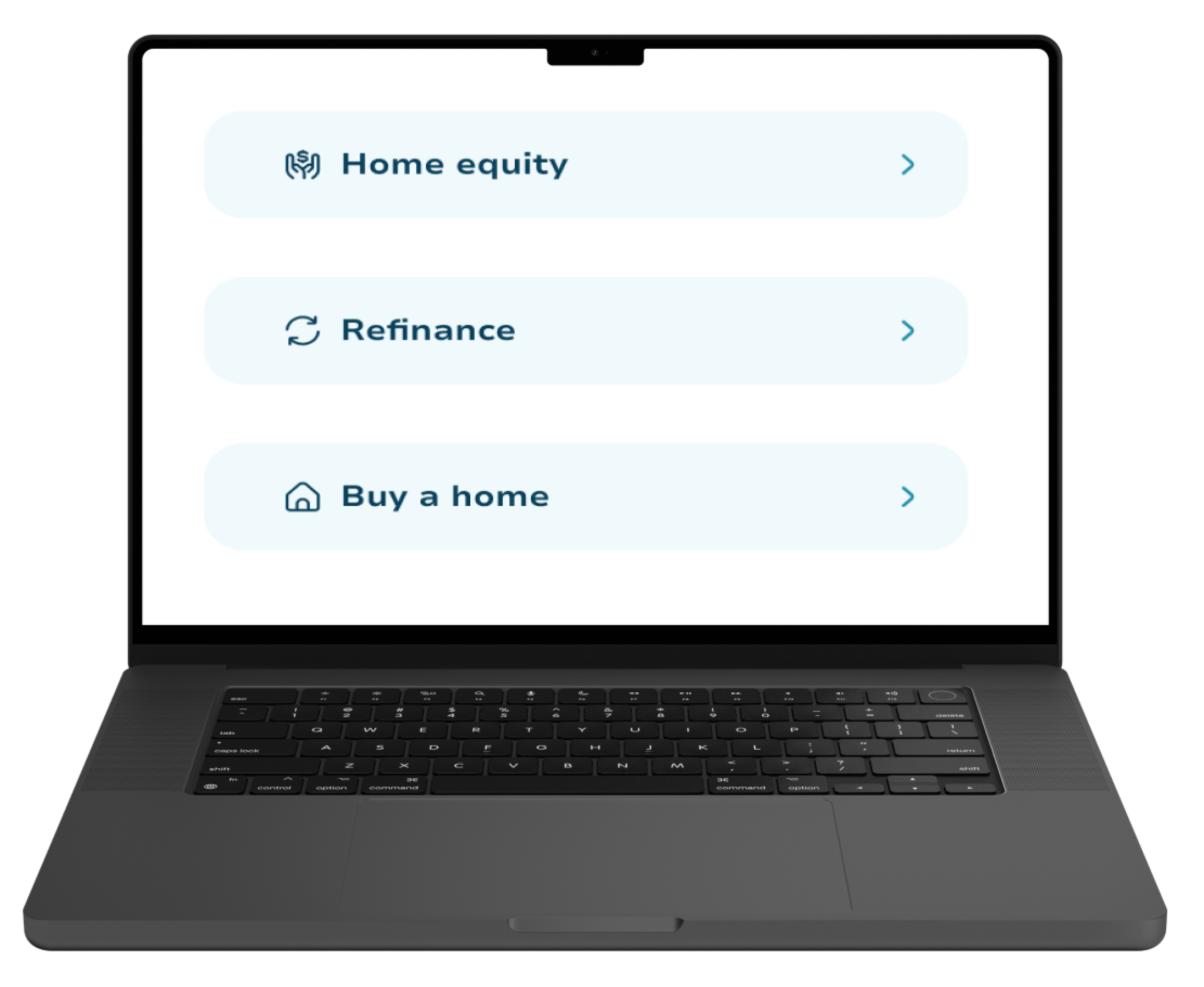
A graphic of a laptop with the Mortgage Marketplace survey on it. It has the buttons for "Home equity", "Refinance", and "Buy a home"

What Types of Reverse Mortgages Are There?

Insurance agent recommends insurance policy.

It is important to note that some different types of reverse mortgages have different requirements for eligibility:

Home Equity Conversion Mortgage (HECM)

Also known as Federal Housing Administration (FHA) reverse mortgages, HECMs are the most common type of reverse mortgage and can only be received through a lender approved by the FHA. They come with standardized rules, protection for borrowers, and access to government-approved counseling.


To get an HECM, you must complete a counseling session with an FHA-approved counselor, and your home value must fall below the conforming loan limit set by the FHA.


In general, however, these types of reverse mortgages offer flexible payment options, making them suitable for most retirement planning needs.

Single-Purpose Reverse Mortgages

Single-purpose reverse mortgages are offered by state and local governments or non-profit agencies. They’re typically cheaper than other types of reverse mortgages due to lower upfront fees and lower interest rates. However, they are limited in use as they’re usually restricted to home repairs or property taxes.


For senior homeowners with modest needs and financial goals, as well as limited income, this might be a targeted, affordable solution.


Compare multiple loan options side by side to make informed choices with our free loan comparison calculator.

Proprietary Reverse Mortgages

Sometimes called jumbo reverse mortgages because their loans are bigger in comparison to other reverse mortgage types, proprietary reverse mortgages are privately offered by lenders. These reverse mortgages aren’t backed by the government, so private lenders will often charge higher interest rates and fees. 

With that said, this sort of reverse mortgage allows borrowers with higher-value homes/significant property value to access more equity than an HECM or a single-purpose reverse mortgage would allow.

Is A Reverse Mortgage Right For You?

Street and houses of upscale neighborhood on a summer's day.

A reverse mortgage can be a powerful financial tool for senior homeowners, but it may not be the right fit for everyone. Understanding your long-term goals and lifestyle is key to deciding whether a reverse mortgage aligns with your needs.

Reverse Mortgage Alternatives

If you’re looking to supplement your income and considering a reverse mortgage, also consider these options to achieve your financial goals:

  • Downsizing: selling your property and downsizing to a smaller home offers an alternative way to access home equity.
  • Mortgage refinancing: can be used to lower monthly payments or modify home loan terms; refinancing when rates are low gets you a lower interest rate, which could mean lower monthly payment amounts.
  • Home equity line of credit (HELOC): these function similarly to credit cards and should be used with caution; useful for consolidating debts or providing a large sum of cash for expenses.
  • Home equity loans: allows you to borrow the equity in your home; unlike a HELOC, proceeds are provided in a lump sum payment rather than a line of credit.
  • House hacking (renting out space): viable for long-term or short-term periods; follow the correct legal steps and best practices when renting out space in your home.

Reverse Mortgage Calculator: Estimate Your Payout

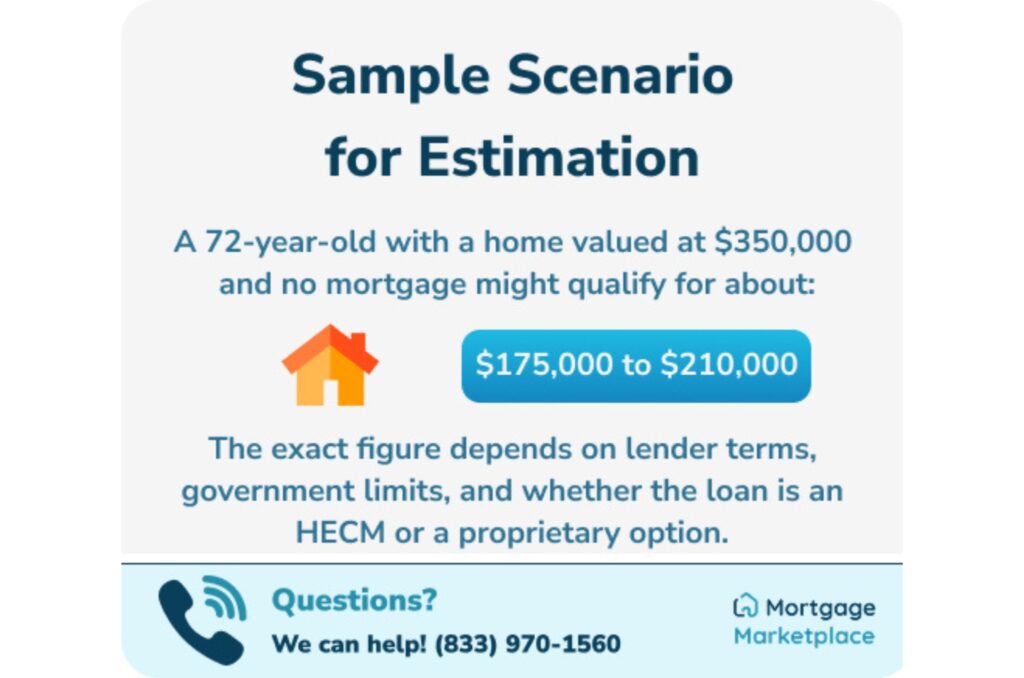
The amount you can borrow depends on several factors. To calculate your estimated reverse mortgage payout, you’ll need to gather the following information:

  • The age of the borrower
  • The home’s appraised value
  • Any outstanding mortgage balances
  • The FHA HECM maximum limit (for HECM reverse mortgages)

Mortgage calculators use the information above to determine your principal limit—the percentage of a borrower’s home equity. The principal limit determines the maximum loan amount a borrower can receive. Do note that if a borrower still owes money on a traditional mortgage, that balance will be paid off first using the borrower’s reverse mortgage proceeds.


In general, older borrowers can typically access more equity, and a lower interest rate increases their potential payout.

Use our refinance calculator to compare your current mortgage to a new one, estimate your monthly and lifetime savings, and see what other options are available to you.

Reverse Mortgage Rates and Fees

Reverse mortgage rates fluctuate like conventional mortgage rates. Borrowers can choose between the following:

  • A fixed rate: usually only available with a lump sum payout.
  • A variable rate: applies to flexible payout options (I.e., monthly disbursements, a line of credit).

Common Fees With Reverse Mortgages

Like conventional mortgages, it’s important to be wary of the costs associated with reverse mortgages. Common fees include the following:

  • Application fees
  • Origination charges
  • Appraisal fees
  • Mortgage insurance premiums (MIP)
  • Closing costs
  • Interest (dependent on loan type)
  • Homeowners insurance

Additionally, monthly servicing fees may apply throughout the life of the loan. Such costs are often rolled into the loan, but ultimately reduce the borrower’s total available funds.

Common Fees With Reverse Mortgages

All fees and interest are added to the loan balance over time. This means that the longer you stay in your home, the more your loan accrues, and the less equity remains for you or your heir(s).

Pros & Cons of Paying for Mortgages with Credit Cards

Pros

A graphic of a rounded green bar.
  • No monthly mortgages
    Repayment is deferred until the borrower sells, moves out, or passes away.
  • Access to tax-free cash
    Reverse mortgage funds are loan proceeds, not income, so the IRS doesn’t tax it.
  • Stay in your home
    The borrower can remain in their home for as long as they live there and meet the loan requirements.
  • Never owe more than the home’s worth
    If a borrower remains in their home for an extended period, their reverse mortgage loan balance may eventually grow larger than the value of their home.

Cons

A graphic of a rounded, red bar.
  • High upfront fees
    Reverse mortgages often come with closing costs, insurance premiums, and origination fees that reduce the borrower’s total available funds.
  • Reduced home equity
    As the loan balance grows over time, the amount of equity the borrower or their heir(s) retain decreases.
  • Possible foreclosure risk
    If the borrower doesn’t stay current on property taxes, homeowners’ insurance, or upkeep, the lender may foreclose.

How Much Equity Works for You?

Slide to choose your amount and let’s get started!

10k
10k
500k
See my options

Reverse Mortgage vs. Home Equity Loan/HELOC

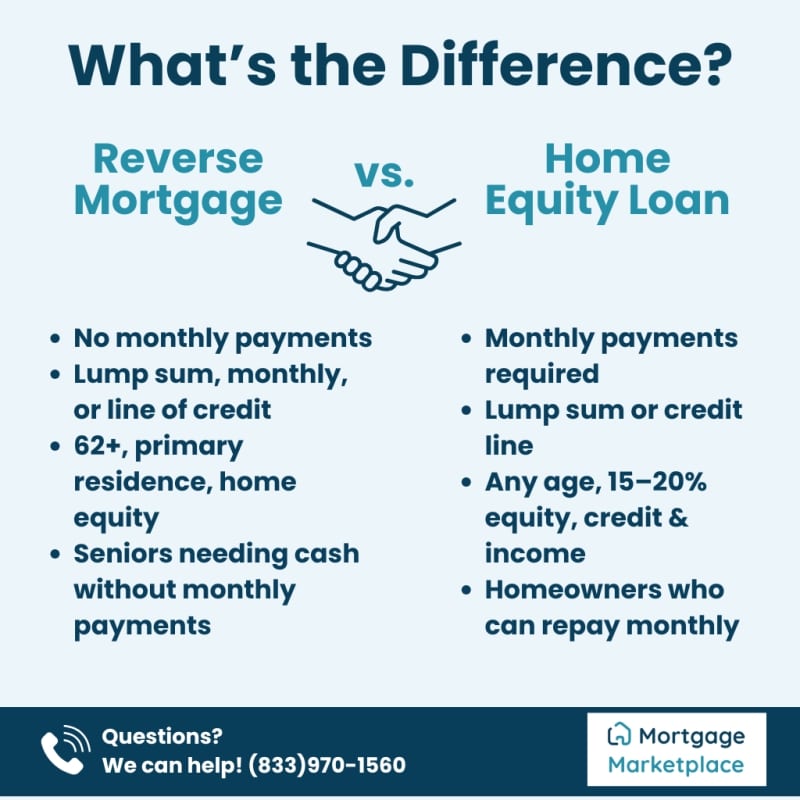
Unlike a reverse mortgage, home equity loans and HELOCs require monthly repayments and are available to a broader age group. Reverse mortgages are typically better for short-term needs, borrowers who can handle monthly payments, and offer more flexibility for retirees on a fixed income.

When to Consider Each Type

A reverse mortgage is ideal for homeowners who need long-term financial support and plan to stay in their home for as long as possible. Home equity loans or HELOCs may be better if you need a specific amount for a short-term goal and can repay it regularly.

Final Thoughts

While a reverse mortgage can be a way to unlock the value of your home and supplement your income in retirement, it is also a specialized financial product that can be costly to take out. For those aged 62 or older who need funds and want to keep their home property, reverse mortgages can provide flexibility if they lack alternative assets for supplemental income or if they are unable to qualify for another personal loan.


If you’re interested in qualifying for and purchasing a reverse mortgage, Mortgage Marketplace is here to help simplify the process. We’ll help you navigate each step with clarity and confidence. Take the first step toward making your home work for your future. Get started online or speak with one of our mortgage experts today.

Qoutation Mark

I appreciate the breakdown of closing costs—it’s something I hadn’t considered before. Great read!

Qoutation Mark

Great article! I didn’t realize how important it is to budget for maintenance and closing costs. Very helpful!

Qoutation Mark

This was super insightful! The tips on saving for a down payment cleared up a lot of confusion for me.

FAQ

What is a reverse mortgage?

+

A reverse mortgage is a loan taken out on a home that allows borrowers to take a loan against the equity on a home that doesn’t have to be repaid during a borrower’s lifetime.

How does a reverse mortgage work?

+

The lender pays the homeowner—those with a reverse mortgage are eligible to borrow against their home’s equity and withdraw tax-free cash.

What happens when the borrower dies or moves out?

+

The loan becomes due; the home is sold to repay the balance owed, and any remaining equity goes to the borrower’s heir(s).

Will my heirs owe anything?

+

No—reverse mortgages are non-recourse loans, which means that heirs are not responsible for loan amounts beyond the home’s value.

Is reverse mortgage income taxable?

+

No, funds received are loan proceeds—not income—and are not taxed.

Can I lose my home with a reverse mortgage?

+

Yes—only if you fail to meet loan terms, such as paying taxes, insurance, or home maintenance.

Can you cancel a reverse mortgage?

+

Yes—thanks to the right of rescission, borrowers can cancel most reverse mortgages without penalty as long as a written request is made within three days of closing and sent to the lender. The lender then has 20 days to return funds already paid toward the loan.

Does it affect Social Security or Medicare?

+

Reverse mortgage proceeds generally do not affect Social Security or Medicare, but they may impact need-based benefits like Medicaid or Supplemental Security Income.

What types of reverse mortgages are available?

+

There are three forms of reverse mortgages: home equity conversion mortgages (HECM), proprietary reverse mortgages (also known as jumbo reverse mortgages), and single-purpose reverse mortgage.

Can you refinance a reverse mortgage?

+

Yes, borrowers can refinance to a new reverse mortgage to access more equity or receive better terms.

Why Choose My Mortgage Marketplace?

Process icon representing simplified mortgage application

Simplified Process

Effortless Application, Expert Support

From pre-approval to closing, our streamlined process and experienced team make home financing stress-free.

Solutions icon representing customized mortgage options

Tailored Solutions

Personalized Plans for Your Needs

Whether it's refinancing, home equity, or a new mortgage, we customize solutions to fit your financial goals.

Transparency icon representing clear mortgage rates

Transparent Experience

Clear Rates, No Surprises

We provide competitive rates and full transparency, so you know exactly what to expect at every step.