






Home buying tips

Home Equity Loans: A Comprehensive Guide for 2025

Feb 11, 2025

8min read

A family standing outside of their newly purchased home. It is a gran home with ivy covering one side of the home.

Home equity loans are a great way to draw cash out of your home’s value. If you own your home, you can tap into its value with a home equity loan. Smart use of your home equity can be a secret weapon when navigating tough financial challenges like major medical expenses, rising debt, education costs, home renovations, and more.

Quick Summary

Home equity loans allow you to borrow from the value you own in your home.

Home equity loans are often used for home improvement projects and debt consolidation.

Key requirements: Most lenders require applicants to have a credit score above 620, at least 15% to 20% owned home equity, and a 43% or lower debt-to-income ratio.

Tips: Home equity loans are best used to build wealth. Use one to improve your home, consolidate your higher-interest debts, or as a down payment for another property.

Discover what you qualify for

let us guide you every step of the way!

What is a Home Equity Loan?

A home equity loan is a type of secondary mortgage loan that borrows from the value you own in your home. These loans use your home as collateral, so lenders can offer rates comparable to more standard primary mortgages. However, because your home is your main source of loan security, a home equity loan could risk foreclosure if you fail to repay it.

You are paid a lump sum determined by your home equity, then repay it over an extended period at a fixed interest rate, just like a traditional mortgage. Loan terms typically range from 5 to 30 years, depending on the amount borrowed. However, unlike a standard mortgage, you can use these funds for any desired purpose. Typical uses include debt consolidation and home improvement projects

See how extra payments can save you thousands by using our free home equity calculator today. 

Neat paved patio with sitting area in front of a modern home with large glass windows.

How Much Can You Borrow with a Home Equity Loan?

Determining your available home equity is straightforward. Simply subtract the amount you owe on your mortgage from your home’s value. That sum is your owned home equity. Many lenders allow you to borrow around 80% to 85% of your owned equity. 

For example, let’s say you own a house worth $500,000. You have paid off some of your mortgage and now owe $400,000. So your owned equity is $100,000. Your hypothetical lender will allow you to borrow up to 80% of that value, or $80,000.

Calculate how much you can borrow with our free home equity calculator.

How Much Equity Works for You?

Slide to choose your amount and let’s get started!

10k
10k
500k
See my options

Home Equity Loan Rates in 2025

Home equity loan rates tend to vary by lender. They are all tied to an industry-standardized rate called the prime rate, calculated by federal and private banking institutions based on economic conditions, overall mortgage rates, inflation calculations, and more. The prime rate determines rates for home lending, credit cards, personal loans, and other loans and credit lines. 

Lenders will assess applicants’ financial conditions and assign an additional interest margin. The sum of this margin plus the prime rate is the total home equity loan rate you will be asked to pay. Your home equity rate will be fixed at this value for the loan’s lifetime.

As of January 2025, the prime rate is 7.5%. Let’s say after a financial inquiry, the lender sets your interest margin at 1.5%. The total home equity rate you would be expected to pay is 9%.

Contact MyMortgageMarketplace for advice on creating your home equity loan plan and to find the loan you need at the rate you want.

Advantages

Home Equity Loan Requirements

See how extra payments can save you thousands by using our free home equity calculator today. Home equity loan practices tend to vary by lender, but common requirements include:

  • At least 15% to 20% home equity
  • A credit score of at least 620
  • 43% or lower debt-to-income ratio

Your lender may require a home appraisal to confirm your home’s fair market value. This allows them to determine how much you’re eligible to borrow.


Determine how much of a loan you can take out on your current home by using our free home affordability calculator today. 

An exterior shot of a modern house in Los Angeles. The facade is completely made of glass.

Take your first step

It only takes 2 minutes to find out what you qualify for.

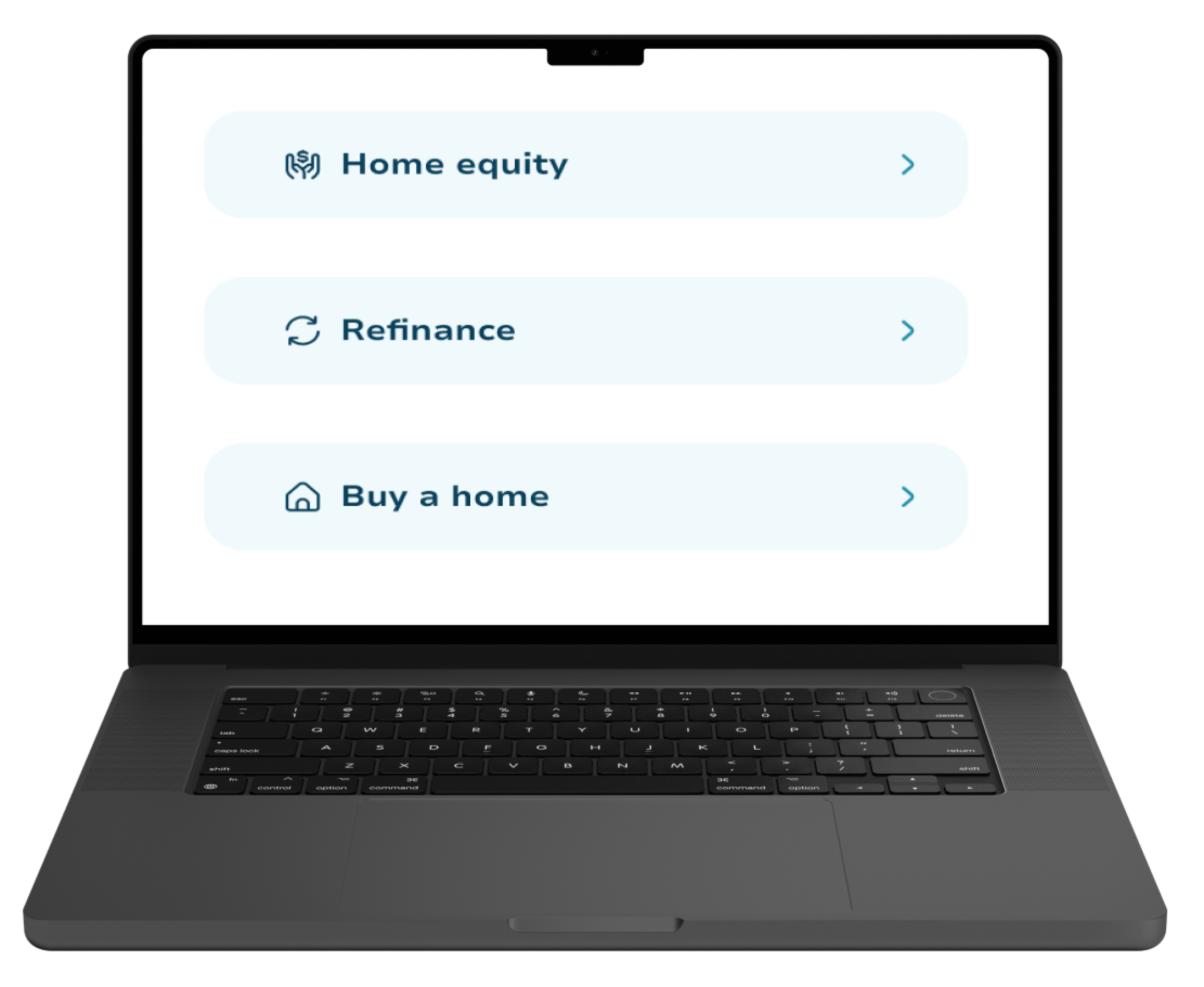
A graphic of a laptop with the Mortgage Marketplace survey on it. It has the buttons for "Home equity", "Refinance", and "Buy a home"

Home Equity Loan Pros & Cons

Your financial situation determines whether you should use home equity loans. You’ll be leveraging your home as collateral, so you should review several options and their benefits and drawbacks before committing to any single home finance plan.

Pros

A graphic of a rounded green bar.
  • You’ll have a predictable payment schedule with a home equity loan, making budgeting significantly easier.
  • Home equity loan rates are often significantly lower than credit card or personal loan rates because the loan is secured by using your house as collateral.
  • If your home’s primary mortgage rate is lower than current rates, you won’t have to lose those rates by refinancing or picking up a second mortgage.
  • Interest on home equity loans for home improvement and renovation can be deducted from taxes.

Cons

A graphic of a rounded, red bar.
  • You’ll pay interest on the loan’s full value, even if you’re not using the entire loan for a project, or using it for an ongoing one.
  • While it’s a boon to your rates, using your home as the loan’s collateral could put it in danger of foreclosure.
  • Large loans like high-value home equity loans or mortgages often require a 2%-5% closing cost fee.
  • The strict repayment schedule could be an issue, especially compared to more lenient repayments for HELOCs (home equity lines of credit) or other loans.
  • If you sell your home before the loan is repaid, you’ll owe the remaining balance.

Home Equity Loans & Alternatives

A home equity loan can be a great way to draw cash out of your home but not the only method. Here are two of the most common alternatives that may fit your financial needs and situation better:

Round hedge and a small statue in the middle of a cobblestone driveway to an elegant, english style house with white windows and brick exterior

Home Equity Loans vs HELOCs

A home equity line of credit, or HELOC, can provide more flexibility than a standard home equity loan. Home equity loans pay a single lump sum with a fixed repayment period, whereas HELOCs draw from your equity in a less structured manner.

HELOCs still have a hard limit on total draw value, but you can borrow smaller amounts over a longer period. You can borrow what you need, pay it back, and then borrow again. You can pay a HELOC back incrementally based on the amount you need to use. This makes it function like a credit card but with far better rates.

HELOCs often have variable interest rates, unlike home equity loan rates, which are fixed and set at the initial draw. Your rate can rise or fall over time, which makes payments far less predictable. Rates may be discounted at the HELOC loan’s start as an introductory offer.

HELOCs are often structured differently from home equity loans. They have an extended draw period, typically around 10 years, unlike the home equity loan’s single lump-sum draw. Then you’ll have a repayment period, usually around 20 years.

Advantages

Home Equity Loans vs Cash-Out Refinances

A cash-out refinance involves replacing your existing primary mortgage with a new, larger primary loan. This allows you to spend the lump-sum difference. 

You’ll have a new mortgage, and with that, comes a new interest rate. If you already have a rate favorable versus current markets, it’s probably best to take a different route. In addition, you’ll be required to pay closing costs, typically around 2%-5% of the mortgage’s total value.

Cash-out refinances typically don’t require you to own as much equity as home equity loans, but you could be stuck with an unfavorable rate due to changing market conditions.

Advantages

Final Thoughts

Home equity loans can help draw cash from your home’s value, but should be used carefully. If you’re struggling to meet your current mortgage payment, they probably aren’t a good choice. However, if you want to add value to your home or consolidate higher-interest debts, a home equity loan can be a great choice.

Get pre-qualified today with MyMortgageMarketplace and see how close you are to owning your next vacation rental. Call now for more information on home equity loans and to see if they are the right choice for your financial situation.

Qoutation Mark

I appreciate the breakdown of closing costs—it’s something I hadn’t considered before. Great read!

Qoutation Mark

Great article! I didn’t realize how important it is to budget for maintenance and closing costs. Very helpful!

Qoutation Mark

This was super insightful! The tips on saving for a down payment cleared up a lot of confusion for me.

FAQ

What is the difference between a home equity loan and a HELOC?

+

The major difference between home equity loans and HELOCs is the lending and repayment structure. A home equity loan pays in a single, lump-sum payment with a regimented repayment schedule, while a HELOC allows smaller draws over an extended period.

What percentage of home equity can you borrow?

+

Most lenders will allow you to borrow up to 80% to 85% of your owned home equity.

Can home equity loans be used for anything?

+

Home equity loan lump-sum payments can be used for any purpose, though it’s usually best to use yours for debt consolidation or home improvement.

Can home equity be used as a down payment?

+

You can use a home equity loan as a down payment on a second home or other property, but remember that if you sell the property with the home equity loan, you’ll need to pay back the loan’s entire value.

What is the difference between a home equity loan and a second mortgage?

+

A home equity loan is a second type of mortgage. The only real difference between the two is the loans’ purposes. Home equity loans have the tightened scope of only being used to access home value.

Can you use home equity to consolidate debts?

+

Debt consolidation is one of the best uses for home equity loans. If you’re stuck with a credit card bill or other personal debt with unfavorable rates, accessing home equity may be a prudent financial decision. A home equity loan is secured by using your home as collateral, giving you far better rates than unsecured loans like credit cards and personal loans.

Why Choose My Mortgage Marketplace?

Process icon representing simplified mortgage application

Simplified Process

Effortless Application, Expert Support

From pre-approval to closing, our streamlined process and experienced team make home financing stress-free.

Solutions icon representing customized mortgage options

Tailored Solutions

Personalized Plans for Your Needs

Whether it's refinancing, home equity, or a new mortgage, we customize solutions to fit your financial goals.

Transparency icon representing clear mortgage rates

Transparent Experience

Clear Rates, No Surprises

We provide competitive rates and full transparency, so you know exactly what to expect at every step.